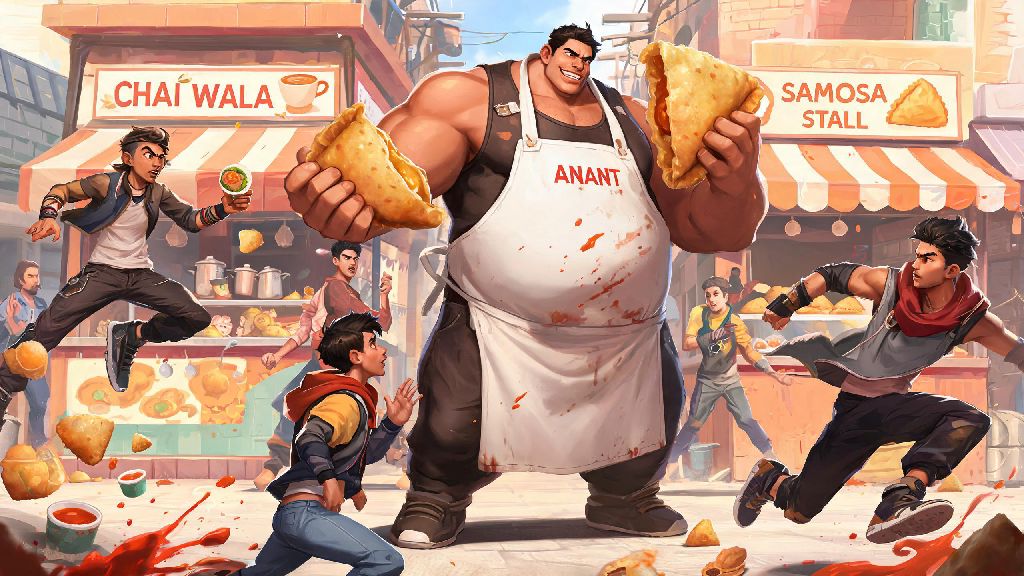
If you’ve spent any time playing the hit casual multiplayer party game Block Party Brawlers, you’ve almost certainly run across the fan-favorite playable character Anant, and probably asked yourself why is Anant so fat compared to every other fighter on the roster. His oversized frame stands out immediately next to slimmer, faster characters like Zara and Jax, and a lot of new players assume his size is just a silly cosmetic choice with no real purpose. But that’s far from the truth: every part of Anant’s design, including his weight, is carefully crafted to fit his specific playstyle and lore background. We’re breaking down every reason for his iconic size, plus how you can leverage it to win more matches, even if you’re a total beginner.
The Lore Backstory Behind Anant’s Size
First, Anant’s design is rooted in the game’s official lore, which is revealed through unlockable character comics and loading screen snippets. Anant is a former professional street food vendor from the game’s fictional coastal city of Mariner’s Bay, who spent decades testing his own curry, samosa, and mango lassi recipes multiple times a day to make sure they were perfect for his customers. He entered the Block Party Brawlers tournament to win prize money to save his family’s restaurant from being demolished to build a luxury shopping mall. His size is a direct nod to his love of food and his identity as a community-focused vendor, not a random punchline for cheap jokes. A lot of players love that his design celebrates people who find joy in food and community, instead of forcing every character to fit a generic “fit fighter” mold. The dev team has even stated in past dev diaries that they wanted to create a character that felt warm, approachable, and relatable to players who don’t see themselves in standard fighting game protagonists.
Why Is Anant So Fat: Core Gameplay Mechanical Advantages
Beyond lore, Anant’s size comes with a long list of unique mechanical perks that make him one of the highest win-rate characters for players who prefer a defensive, high-damage playstyle. You don’t have to be a pro player to take advantage of these perks, either; even casual players can pick him up and start winning matches after just a few rounds of practice. His extra weight gives him 35% more knockback resistance than the average character, meaning you won’t get launched off the stage by a single light attack from a faster opponent. He also deals 20% more damage with all of his close-range melee attacks, since his size gives him extra momentum behind every punch and kick. A lot of casual players who bounce between different party games to play with friends notice that character design tradeoffs between speed and power are common across almost every casual multiplayer title. If you’re the type of player who likes low-stakes, relaxed game nights with friends, you’ve probably tried Rummy Ludo for quick, low-pressure rounds between longer Block Party Brawlers sessions, and noticed that same kind of balanced tradeoff between high-risk, high-reward moves and safe, consistent plays. That same design logic applies to Anant: he’s slow, but his power and durability more than make up for the lack of speed for players who don’t want to worry about hyper-fast button mashing.
Common Misconceptions About Anant’s Size
A lot of new players write off Anant entirely because of his size, assuming he’s a “joke character” that’s only good for trolling, but that’s one of the biggest mistakes you can make when picking a main. Most of these myths come from players who have never actually spent time learning his kit, or who only played him once and lost because they tried to play him like a fast, agile character. Let’s break down the most common myths about Anant, so you can avoid making these mistakes yourself:
Even the top competitive players in the community regularly pick Anant for tournament matches, so don’t let random comments from random public lobby players convince you he’s not a viable pick. His design is intentionally balanced to fit a specific playstyle, and he’s just as powerful as any other character on the roster when played correctly.
How To Leverage Anant’s Size To Win More Matches
If you’re interested in trying Anant out for yourself, there are a few simple tips you can follow to make the most of his unique size and kit, even if you’re a total new player. First, prioritize staying close to the center of the stage, so you don’t have to move long distances to chase opponents. Use your samosa toss special attack to pressure fast characters from far away, then move in for a heavy melee attack once they’re stunned. Don’t waste your dash ability on small movements – save it for escaping high-damage combo attacks or closing the gap on an opponent who is low on health. You should also pair him with support items that boost his movement speed slightly, like the Sneaker Power Up, to offset his biggest weakness without taking away any of his natural damage or resistance advantages. It doesn’t take long to get used to his playstyle, and most players are able to get their first win with him in under 10 matches, which is far faster than most of the more technical characters on the roster. If you usually play with a team, pair Anant with a fast support character who can pick off enemies that try to run away from your heavy attacks, and you’ll have an almost unbeatable combination for both casual and ranked play.
At the end of the day, the answer to why is Anant so fat isn’t just a silly joke or lazy character design – it’s a deliberate choice that ties together his lore, his unique playstyle, and the dev team’s goal of creating relatable, accessible characters for all types of players. Whether you’re a casual player who just wants to have fun with friends at game night, or a ranked player looking to climb the leaderboard with a high-power, low-fuss main, Anant is a fantastic pick that’s worth trying out for your next match. Don’t let his oversized frame fool you: he’s one of the most powerful, well-designed characters in the entire game, and he’s earned his spot as a fan favorite for good reason.