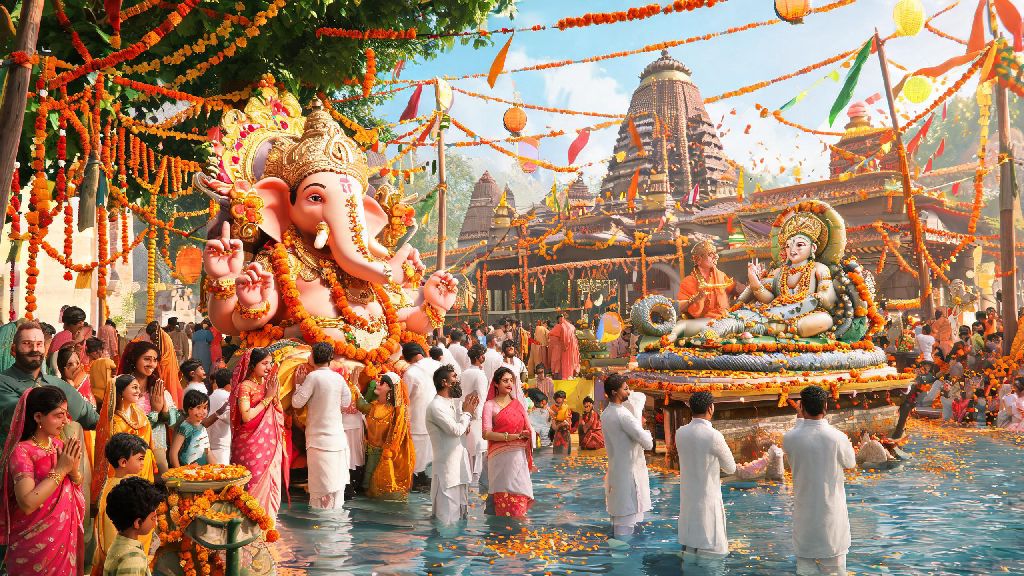
If you’re planning to mark the end of the 10-day Ganesh Chaturthi festivities or observe the sacred worship of Lord Vishnu’s Anant form, you’re probably looking up when is Anant Chaturdashi in 2025. This festival holds dual significance for Hindu communities across India and the global diaspora, tying together the immersion of Ganesh idols and the vrat (fast) dedicated to the eternal form of Vishnu. Many families start planning their celebrations weeks in advance, from booking immersion processions to prepping ingredients for the special vrat dishes, so getting the exact date and timing right is non-negotiable to avoid missing auspicious windows.
Exact Date and Auspicious Timings: When is Anant Chaturdashi in 2025
Based on the latest Hindu panchang calculations, the Chaturdashi tithi for Anant Chaturdashi begins at 6:12 PM on 16th September 2025 and ends at 4:08 PM on 17th September 2025. The most widely accepted public holiday date for Anant Chaturdashi 2025 is 17th September, Wednesday, as most regions follow the rule of observing the festival when the tithi is present during the sunrise hours. If you’ve been searching for when is Anant Chaturdashi in 2025 for official leave planning, note that most state governments in India will list 17th September as the public holiday for the festival.
Some southern Indian states and parts of Kerala may observe the festival on 16th September 2025, as local traditions prioritize the start of the tithi over the sunrise window. It’s always a good idea to cross-check with your local community priest or regional panchang if you follow location-specific customs to make sure you’re observing the festival on the right day. The most auspicious window for Ganesh idol immersion falls between 9 AM and 7 PM on 17th September for most parts of north, west and east India.
Key Significance of Anant Chaturdashi You Should Know
Unlike most Hindu festivals that are dedicated to a single deity, Anant Chaturdashi celebrates two separate sacred events that fall on the same tithi each year. The first and more widely known significance is that it marks the final day of the Ganesh Chaturthi festival, when all idols of Lord Ganesha installed in homes, public pandals and community spaces are immersed in water bodies. This ritual symbolizes Lord Ganesha returning to his home on Mount Kailash, taking away all the sorrows, obstacles and negative energy of his devotees with him.
The second, equally important significance is that the day is dedicated to the Anant Roop (infinite form) of Lord Vishnu. Devotees observe the Anant Vrat on this day to seek blessings for long-term prosperity, family harmony, healing from illness, and fulfillment of long-pending wishes. Devotees who observe the Anant Vrat typically do so for 14 consecutive years to receive the full blessings of the ritual. I’ve seen many of my neighbors in Maharashtra combine both celebrations, first completing the vrat rituals in the morning before joining the community immersion procession in the afternoon.
The festival is also seen as a day of new beginnings, as the end of Ganesh Chaturthi marks the start of the upcoming festive season in the Hindu calendar, leading up to Diwali a few months later. Many small business owners start new projects or launch new products on this day, as it’s considered extremely auspicious for new ventures.
Essential Rituals and Practices to Follow on Anant Chaturdashi
Whether you’re observing the vrat, participating in Ganesh immersion, or both, there are a few standard practices that most communities follow to make the most of the auspicious day. You don’t have to follow every single ritual if you’re new to the festival, even small acts of devotion count as long as you have pure intentions. Now that you know when is Anant Chaturdashi in 2025, you can also pre-order any puja items or eco-friendly Ganesh idols ahead of time to avoid last-minute price hikes.
That means you don't have to spend a lot of money to celebrate the festival properly. Even a small clay idol and simple home-cooked prasad are enough to receive the blessings of Lord Ganesha and Lord Vishnu. If you’re fasting for the Anant Vrat, you can consume satvik food like fruits, milk, root vegetables and sago khichdi, and avoid onion, garlic, non-vegetarian food and alcohol for the entire day. You can break the fast after sunset once the evening aarti is completed.
Common Mistakes to Avoid During Anant Chaturdashi Celebrations
Even long-time devotees sometimes make small missteps that can take away from the joy of the festival or cause unnecessary harm to the environment, so it's good to be aware of these ahead of time. First, don't rush the immersion process just to fit your work or personal schedule. If you're observing the Anant Vrat, make sure you complete all the vrat rituals before you head out for the immersion, otherwise the vrat might be considered incomplete according to traditional customs.
Second, don't use plastic bags or non-biodegradable materials to carry the idol or decoration items. I’ve seen local municipal teams set up special artificial immersion tanks in most cities now, so you can use those instead of going to natural rivers or lakes if that's more convenient, and it reduces the risk of water pollution. Many local organizations also collect leftover puja items for proper disposal, so you don’t have to throw them into water bodies at all.
Third, don't play loud music or create unnecessary disturbance in residential areas during processions, especially late at night, since many people might have work or school the next day. Try to wrap up processions by 8 PM if you’re in a residential neighborhood, to be considerate of people around you. If you’re hosting a small celebration at home, make sure you clean up all waste properly after the rituals, including flower petals and prasad leftovers, instead of throwing them directly into water bodies or public drains.
Another common mistake is buying idols from unlicensed vendors who use toxic paints and materials that are harmful to the environment. Always buy idols from trusted local artisans who use natural, non-toxic materials, even if they cost a little extra, as it’s a small investment that helps protect the planet and supports local livelihoods.
Now that you know when is Anant Chaturdashi in 2025, you can start planning your celebrations well in advance, whether that means coordinating with your local community for the immersion procession, prepping the ingredients for the vrat prasad, or inviting friends and family over to mark the day together. The core of the festival is all about gratitude, community bonding, and seeking blessings for a happy, prosperous year ahead, so don't stress too much about getting every ritual perfect as long as you approach the day with good intentions. If you have family members who follow different regional traditions, you can always combine practices to make the day feel special for everyone involved.